Black and White Nature Photography: Looking Beyond the Wildlife
Most people know me primarily as a wildlife photographer. Animals have been the focus of my work for many years and continue to inspire me every time I head out with a camera.
But wildlife is only part of the picture. In the course of my work, I’m also a nature photographer.
The landscape, the weather, the trees, rivers and open spaces all contribute to the final image. Sometimes they simply provide the setting. On other occasions, they become just as important as the animal itself.
For me, black and white nature photography is about far more than removing colour.
It's about simplifying a scene – whether that’s one featuring natural elements or wildlife, or both, and allowing shape, light, texture and atmosphere to take centre stage.
Related: Nature Photographer vs Wildlife Photographer: What’s the Difference?
Black and White Nature Photography Tips
Simplicity is Often the Strongest Composition
One of the reasons I continue to enjoy photographing the Maasai Mara in Kenya is because of its simplicity. As I often say, the Maasai Mara in Kenya, for all its wide open places and clean lines, is a photo minimalist's dream.
Its open plains, distant horizons and scattered acacia trees naturally lend themselves to minimalist photography. Rather than filling every corner of the frame, they encourage you to simplify your composition and allow the subject room to breathe.
Whether it's a lone elephant crossing the plains, a giraffe silhouetted against the sky or a single tree standing against an approaching storm, the simplest black and white nature photos are often the ones that remain with us the longest.

Black and White Nature Photos Don’t Always Need An Animal
Although I’m best known for black and white wildlife photography, not every memorable photograph needs an animal to tell a story.
One image that means a great deal to me is Wooden Soldiers, a photograph of an ancient oak tree growing quietly in Richmond Park, just a few miles from my home in London.
It isn't dramatic. There are no predators, no action and no rare wildlife. Yet I find it every bit as fascinating.
As I wrote when I photographed it, this may be one of my favourite objects of all time. It's a living object, and it's been in this place long before Africa was colonised.
The tree was already mature when Henry VIII was on the throne. It had witnessed the Black Death, the Hundred Years' War and the founding of the United States. Long after we're all gone, it will almost certainly still be standing.
People walk past it every day, often without a second glance. I never do.
Photography has taught me that remarkable subjects aren't always rare. Sometimes they've simply been overlooked.
Let the Landscape Tell Part of the Story
When people think of wildlife photography, they often imagine tightly cropped portraits filling the frame.
I enjoy those photographs too, but I also like allowing the landscape to play its part.
The Mara River, distant hills, morning mist, dramatic cloud formations or even the space surrounding an animal can all contribute to the atmosphere of an image, and in a black-and-white landscape image, even more so.
Without those natural elements, many wildlife photographs lose much of their sense of place.
Empty Space Adds More
One of the simplest pieces of compositional advice I can offer is this: Empty space adds more.
It sounds contradictory, but giving a subject room within the frame often creates a stronger image than filling every available space.
Negative space draws attention to the subject, creates balance and allows the viewer's eye to settle naturally.
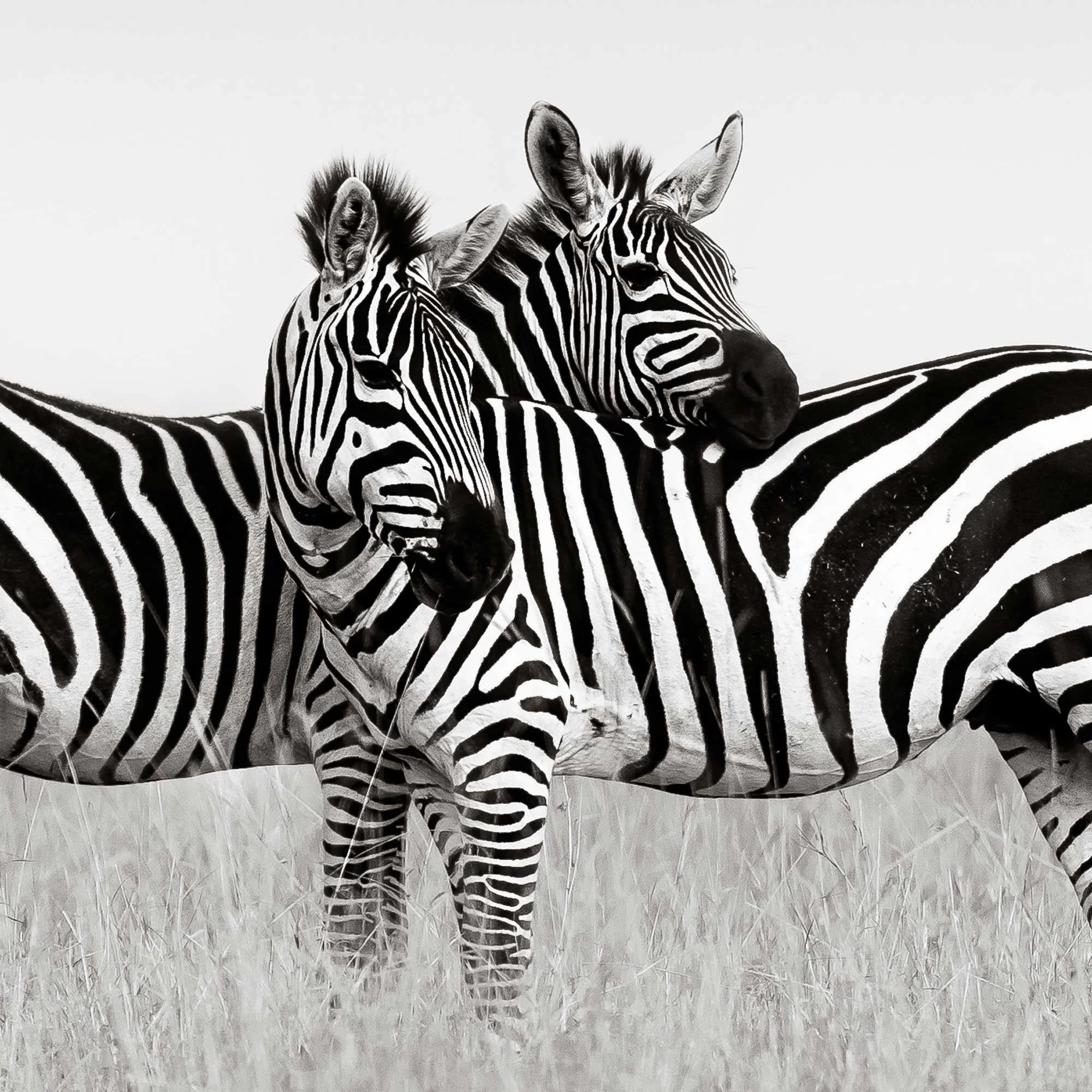
One of my own photographs, Just the Two of Us, is a good example of this approach. The surrounding space isn't empty at all. It helps tell the story.
Sometimes what you leave out of a photograph is every bit as important as what you include.
When Photographing in Nature, Always Be Aware of Your Surroundings
One lesson wildlife and nature photography has taught me is to avoid becoming so focused on one subject that I miss everything else happening around me.
I remember photographing a clan of hyenas at a den. They had everyone's attention and were providing plenty of photographic opportunities.
Then the light changed.
When I turned around, an enormous storm cloud had formed behind us. At exactly the same moment, an elephant was approaching a lone tree across the plain.
That photograph eventually became ‘A Storm-A Comin'.
Had I remained focused on the hyenas, I would never have seen it. So, it definitely pays to be aware of your surroundings.
Some of the best photographs appear when you're prepared to look beyond the obvious.
Black and White Reveals What Colour Can Hide
Colour can be beautiful, but it can also become a distraction. Removing it encourages us to look more closely at shape, light, texture and atmosphere.
The folds of an elephant's skin, the rough bark of an ancient tree, reflections on the Mara River or dramatic storm clouds all take on greater significance in black and white.
Rather than asking what colour a scene contains, I often find myself asking whether the composition itself is strong enough to stand on its own.
If the answer is yes, then black and white often becomes the natural choice.
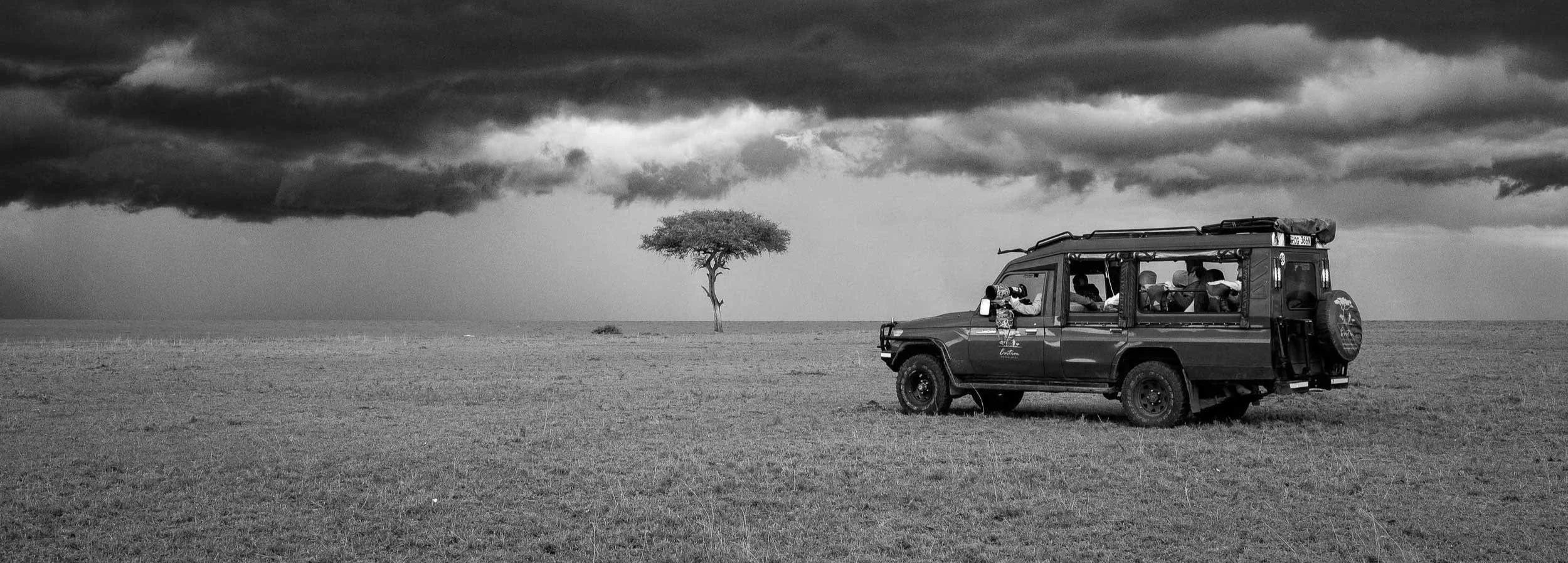
Dramatic clouds and a lonely tree in the Maasai Mara, Kenya
My Approach to Black and White Nature Photography
People sometimes ask why I continue to photograph in black and white. The answer is simply that it suits the way I see.
I'm naturally drawn towards simplicity rather than complexity, atmosphere rather than spectacle, and composition rather than unnecessary detail.
Whether I'm photographing a lion, an elephant, an ancient tree or a storm rolling across the African plains, I'm always looking for the same thing - a photograph that feels honest.
One that allows nature to speak for itself.
Photography Has Changed the Way I See Nature
Photography has taught me to slow down; to notice the old tree that everyone else walks past. To appreciate an approaching storm or the reflections on a quiet river. To wait a little longer before pressing the shutter.
Those moments don't always contain dramatic wildlife, but they often become some of the photographs I value most.
When photographing wildlife, it's easy to focus entirely on the animal. But some of my favourite images owe just as much to the landscape, the weather, the light or the empty space surrounding the subject.
Whether it's an ancient tree, the Mara River, a dramatic storm or a lone elephant on an open plain, these natural elements help tell the story every bit as much as the wildlife itself.
Perhaps next time you're out with your camera, don't just ask yourself what you're photographing. Ask yourself what else in the landscape deserves your attention.
FAQ: Black and White Nature Photography
Why photograph nature in black and white?
Black and white simplifies a scene by removing the distraction of colour. It encourages the viewer to focus on shape, texture, light and composition, often revealing details that might otherwise go unnoticed.
What makes a good black and white nature photograph?
Strong black and white nature photographs usually begin with a strong composition. Light, contrast, texture and the relationship between the elements in the frame are often more important than colour.
Is black and white photography suitable for wildlife?
Absolutely. Some wildlife subjects lend themselves particularly well to black and white photography. Animals such as elephants, buffalo, gorillas, lions and zebra all possess wonderful textures, shapes and expressions that become even more striking when colour is removed.
What is minimalist nature photography?
Minimalist nature photography focuses on simplicity. Rather than filling the frame, it often uses negative space, clean lines and carefully balanced compositions to draw attention to the subject.
Does every nature photograph need wildlife?
No. Trees, rivers, dramatic skies, reflections and changing weather can all make compelling photographic subjects in their own right. Sometimes these natural elements become just as important as the wildlife itself.
Why do you often leave empty space in your photographs?
I believe empty space can strengthen a composition rather than weaken it. It allows the subject room to breathe, creates balance within the frame and often gives a photograph a greater sense of atmosphere and scale.
Do you plan your compositions or wait for them to happen?
A little of both. Experience helps you recognise locations with photographic potential, but patience is often the most important ingredient. Many of my favourite images have come from waiting quietly for nature to arrange itself rather than trying to force a photograph.
Why do you enjoy black and white photography so much?
I've always been drawn to black and white photography. I enjoy the way it simplifies a scene and encourages the viewer to look beyond colour. For me, it's not about making an image more dramatic. It's about revealing the beauty of light, texture, shape and atmosphere in the natural world.
Explore My Black and White Nature Photography
Many of the photographs featured throughout this article are available as fine art prints, alongside a wider collection of black and white nature and wildlife photography from Africa, India and beyond.
If you'd like to explore the collection or experience these remarkable landscapes and wildlife for yourself on one of my photographic safaris, I'd be delighted to hear from you.
Don’t forget to also explore my wildlife photography books, which feature some of my best black and white photography of wildlife and nature.
Also, please subscribe to receive wildlife photography tips, news and advance notice about print releases, safaris, new destinations and subscriber offers.
David